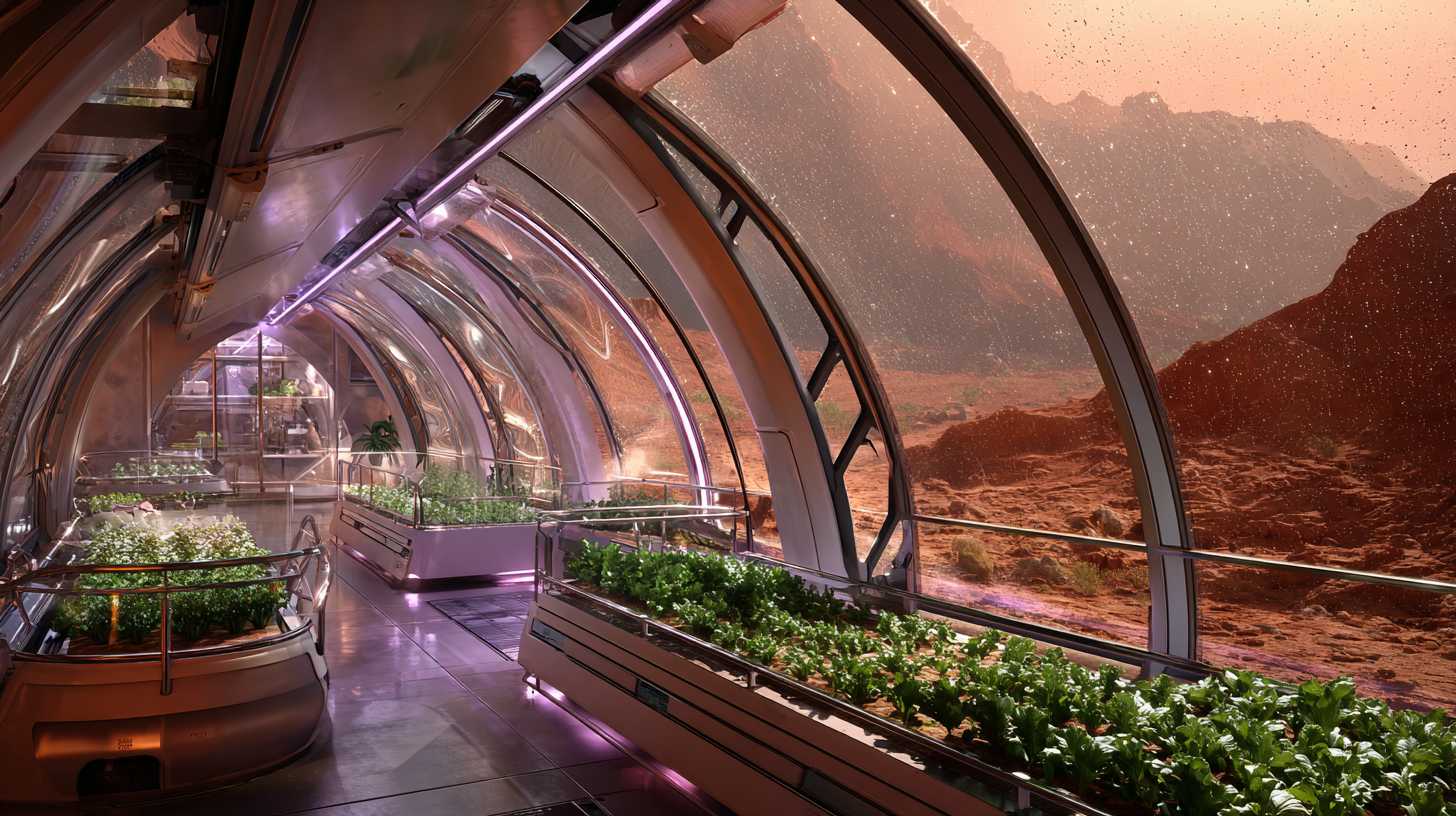
You step outside on Mars. It is minus 60 degrees Celsius. The air — if you can call it air — is 95% carbon dioxide at less than 1% of Earth's atmospheric pressure. Your unprotected blood would begin to boil at this pressure, a phenomenon called ebullism. The ultraviolet radiation streaming through the thin atmosphere would cause severe sunburn in under ten minutes and cellular DNA damage in under five. The soil beneath your boots contains perchlorate salts at concentrations that would be classified as a toxic waste site on Earth.
And yet — this is the most habitable place in the solar system outside Earth. By a wide margin.
Venus has a surface temperature of 464°C and an atmosphere that would crush a nuclear submarine. Jupiter's moons are bathed in radiation intense enough to kill a human in hours. Titan has liquid methane lakes but a surface temperature of minus 179°C. Mercury has no atmosphere and a 600-degree temperature swing between day and night. The Moon is a vacuum-baked wasteland with two-week nights.
Mars is brutal. But Mars is possible. Every challenge it presents has a known engineering solution. No new physics required. No handwaving. Just hard work, clever design, and the institutional will to do it. This article is a survey of those challenges and those solutions — the practical engineering of survival on another world.
The Atmosphere: Thin, Hostile, and Incredibly Useful
Mars has an atmosphere. This single fact is what separates it from every other candidate for human settlement in the solar system. The atmosphere is thin, toxic, and unbreathable — but it is there, and its presence transforms the engineering problem from impossible to difficult.
The numbers: Mars's atmosphere is 95.32% carbon dioxide, 2.7% nitrogen, 1.6% argon, 0.13% oxygen, and trace amounts of carbon monoxide and water vapor. Surface pressure averages about 610 pascals — 0.6% of Earth's sea-level pressure of 101,325 pascals. At the bottom of Hellas Planitia, Mars's deepest impact basin, pressure reaches about 1,155 pascals. At the summit of Olympus Mons, the solar system's tallest volcano at 21.9 kilometers, it drops to roughly 70 pascals.
| Component | Mars | Earth |
|---|---|---|
| CO2 | 95.32% | 0.04% |
| N2 | 2.7% | 78.1% |
| Ar | 1.6% | 0.93% |
| O2 | 0.13% | 20.9% |
| Surface pressure | 610 Pa (0.6%) | 101,325 Pa |
The Atmosphere as Resource
That 95% CO2 is not just an obstacle. It is feedstock. Through the Sabatier reaction (CO2 + 4H2 → CH4 + 2H2O), Martian atmospheric CO2 combined with hydrogen produces methane rocket fuel and water. Through electrolysis, that water yields oxygen for breathing and hydrogen to recycle back into the Sabatier reactor. Through the reverse water-gas shift reaction (CO2 + H2 → CO + H2O), you get carbon monoxide, which can be used in the Fischer-Tropsch process to produce plastics, lubricants, and synthetic fuels.
NASA's MOXIE experiment (Mars Oxygen In-Situ Resource Utilization Experiment), which flew aboard the Perseverance rover in 2021, demonstrated this principle in practice. MOXIE successfully extracted oxygen from Martian CO2 in 16 separate runs over two years, producing up to 12 grams of oxygen per hour — roughly the output of a small tree. A scaled-up version, approximately 200 times larger, could produce enough oxygen for a crew of four.
The atmosphere is a factory. From Martian air, you can produce: rocket fuel (methane + liquid oxygen), breathable oxygen, water, plastics, building materials, and industrial chemicals. The raw material is literally everywhere, constantly replenished, and free. No mining required — just power and chemistry.
Dust Storms: Drama vs. Reality
Mars is famous for its dust storms, and Hollywood has made them terrifying. In The Martian, a dust storm with winds strong enough to tip over a rocket forces an emergency evacuation. It is gripping cinema and terrible physics.
Mars does have dramatic dust storms. Regional storms occur frequently, and global dust storms — events that shroud the entire planet in a haze of suspended particles — happen roughly every three to four Mars years (5.5 to 7.5 Earth years). The 2018 global storm killed NASA's Opportunity rover by blocking sunlight to its solar panels for months.
But here is what the movies get wrong: the wind has almost no force. Mars's atmosphere is so thin that even a 100 km/h wind exerts less dynamic pressure than a 10 km/h breeze on Earth. You could stand in a Martian hurricane and feel something equivalent to a gentle push. The wind cannot knock you over, blow away your habitat, or damage rigid structures.
The real danger of dust storms is not mechanical but optical and electrical. Dust reduces solar panel efficiency by 40% to 90% during a major storm. Fine dust particles carry electrostatic charges that coat every surface, clog filters, and degrade seals. A global dust storm can reduce surface solar irradiance for weeks or months — which is a serious energy planning challenge, not a structural emergency.
Radiation: The Invisible Challenge
Mars lacks the two things that protect Earth's surface from cosmic radiation: a global magnetic field and a thick atmosphere. Earth's magnetosphere deflects the solar wind and most galactic cosmic rays (GCRs). Earth's atmosphere, with a column mass of about 10,000 kg/m², absorbs most of what gets through. Mars has neither. Its global magnetic field died approximately 4 billion years ago when its iron core stopped convecting, and its atmospheric column mass is roughly 200 kg/m² — fifty times thinner than Earth's.
The result: the Martian surface receives a radiation dose of approximately 0.67 millisieverts per day, as measured by the Curiosity rover's RAD instrument. For comparison, the average person on Earth receives about 0.01 millisieverts per day from all natural sources. A Martian surface dweller absorbs in one day what an Earthling absorbs in two months.
Putting radiation in context: The annual dose on the Martian surface is roughly 245 mSv — about half the career limit for NASA astronauts (600 mSv) and well above the 50 mSv/year limit for terrestrial radiation workers. This is a serious concern for long-term settlement, but it is not the instant death sentence that sensationalized media coverage sometimes implies. The key is shielding.
Shielding Solutions
Radiation shielding on Mars comes in several forms, each with different trade-offs:
- Regolith shielding: Martian soil is the simplest and most abundant shielding material. Two to three meters of regolith overhead reduces radiation to near-Earth-surface levels. Robotic bulldozers or regolith-bagging systems could pile material over habitat modules before crew arrival. The engineering is straightforward; it is the same principle as a medieval castle's earthen ramparts.
- Lava tubes: Mars has lava tubes — underground tunnels formed by ancient volcanic flows — that dwarf anything on Earth. The Mars Reconnaissance Orbiter has identified candidate lava tube skylights (collapsed ceiling sections) in the Tharsis region with estimated diameters of 200 meters or more. For comparison, Earth's largest known lava tubes are about 15 meters wide. Martian gravity (0.38g) allows much larger tubes to remain structurally stable. A habitat inside a lava tube would be shielded by tens of meters of basalt — effectively zero radiation exposure.
- Water walls: Water is an excellent radiation shield. A habitat with water tanks integrated into its walls — serving the dual purpose of radiation shielding and water storage — can reduce crew exposure by 50% or more with just 20 centimeters of water thickness. NASA's TransHab design explored this concept extensively.
- Underground habitats: Excavating below the surface provides inherent shielding. The energy cost of excavation is significant, but the resulting habitat space is permanent, expandable, and naturally thermally insulated. The constant subsurface temperature on Mars is approximately -60°C — cold but stable and much easier to heat than a surface habitat exposed to temperature swings.
The practical approach for early settlements will likely combine these strategies: initial surface habitats with regolith piled overhead for immediate shielding, followed by gradual expansion into lava tubes or excavated underground spaces as the colony's construction capability matures.
Water on Mars: More Than Enough
If Mars were bone-dry, settlement would be orders of magnitude harder. It is not. Mars has water — enormous quantities of it, confirmed by multiple missions across three decades of exploration.
The evidence trail: In 2002, the Mars Odyssey orbiter's neutron spectrometer detected vast hydrogen deposits just below the Martian surface at high latitudes — a signature of subsurface ice. In 2008, NASA's Phoenix lander physically exposed and photographed water ice a few centimeters below the surface at its landing site near the north pole (68°N latitude). The ice sublimated visibly over several days, confirming beyond doubt that accessible water ice exists on Mars.
The Mars Express orbiter's MARSIS radar and the Mars Reconnaissance Orbiter's SHARAD radar have since mapped subsurface ice deposits across the planet. The findings are staggering: the south polar layered deposits alone contain approximately 1.6 million cubic kilometers of ice — enough water to cover the entire planet to a depth of about 11 meters if melted.
Korolev Crater: One of the most visually striking water ice deposits on Mars sits in Korolev Crater, a beautifully preserved 82-kilometer-wide (51-mile) impact crater in the northern lowlands at 73°N. The crater floor is permanently covered by a mound of water ice approximately 1.8 kilometers thick and 60 kilometers wide. This single deposit contains roughly 2,200 cubic kilometers of water ice — comparable to Great Bear Lake in Canada. It persists year-round because the crater acts as a cold trap: air flowing over the ice cools and sinks, creating a permanent layer of cold air that prevents sublimation.
More accessible for equatorial and mid-latitude settlements are the subsurface ice deposits discovered by SHARAD between 30° and 60° latitude in both hemispheres. These deposits, often covered by just one to ten meters of regolith, represent accessible water reserves for settlements that don't want to operate at polar latitudes.
The Recurring Slope Lineae Controversy
In 2011, planetary scientist Alfred McEwen and colleagues reported dark streaks that appeared on steep slopes during warm seasons and faded during cold seasons, dubbed recurring slope lineae (RSL). The initial interpretation was seasonal liquid water flow — briny liquid kept from freezing by dissolved perchlorate salts. The announcement generated enormous excitement.
Subsequent analysis has been more cautious. A 2017 study by the USGS reinterpreted many RSL features as granular flows — dry dust avalanches triggered by thermal cycling rather than liquid water. The question remains partially open. Some RSL features may involve deliquescence (absorption of atmospheric water by hygroscopic salts), but large-scale liquid water flow on the current Martian surface is now considered unlikely. The good news: it does not matter for settlement planning. The confirmed ice deposits are more than sufficient. Liquid water is a scientific curiosity; frozen water is an engineering problem, and a solved one at that.
Dust: Friend and Enemy
Martian dust is simultaneously one of the greatest resources and one of the most persistent hazards facing a Mars settlement. Understanding its dual nature is critical for survival planning.
The Enemy: Perchlorates and Particle Size
In 2008, the Phoenix lander's wet chemistry lab detected perchlorate salts (ClO4-) in Martian soil at concentrations of 0.5% to 1% by weight. Perchlorates are thyroid-disrupting compounds; on Earth, the EPA limits perchlorate in drinking water to 15 parts per billion. Martian soil contains perchlorate at concentrations roughly 10,000 times higher than the EPA limit.
This does not make Mars soil unusable. Perchlorates are water-soluble and can be removed by washing. A simple water-rinse system can reduce perchlorate concentrations in regolith to safe levels. Several terrestrial bacteria (Dechloromonas and Azospira species) naturally metabolize perchlorates, offering a bioremediation pathway. The challenge is containment: preventing perchlorate-laden dust from entering habitats through airlocks, suit joints, and ventilation systems.
The particle size problem is equally serious. Martian dust particles average 3 micrometers in diameter — roughly the same size as asbestos fibers and small enough to penetrate deep into lung tissue. Unlike Earth dust, which is smoothed by water erosion, Martian dust particles have sharp, angular edges (no water to round them off). Chronic inhalation could cause silicosis-like lung damage. Apollo astronauts reported irritation from lunar dust after just a few EVAs; Martian dust exposure over years or decades is an unknown but concerning risk.
The Apollo dust lesson: After Apollo 17, astronaut Harrison Schmitt reported "lunar hay fever" — nasal congestion and throat irritation from inhaling lunar dust carried into the module on spacesuits. Gene Cernan noted that despite repeated vacuuming, fine dust permeated every surface. Martian dust management will need to far exceed Apollo-era protocols. Every airlock will need electrostatic precipitators, suit-cleaning stations, and positive-pressure vestibules.
The Friend: Building Material
Martian regolith is approximately 18% iron oxide (giving Mars its red color), 20% silicon dioxide, 5% aluminum oxide, 6% calcium oxide, and various other minerals. This is, in essence, a naturally occurring construction feedstock. Several approaches to using it are under active development:
- 3D printing with sintered regolith: Microwave or laser sintering can fuse Martian soil particles into solid structures without any binder material. NASA's Centennial Challenge for 3D-Printed Habitat Design (2015-2019) awarded prizes to teams demonstrating autonomous construction using simulated Martian regolith. The winning design, by AI SpaceFactory, used a basalt-fiber composite that could be produced from Martian raw materials.
- Compressed regolith blocks: Simple mechanical compression, similar to rammed-earth construction on Earth, can produce structural blocks from Martian soil. Adding a small percentage of polymer binder (which can be synthesized from atmospheric CO2 via the Fischer-Tropsch process) produces blocks with compressive strength comparable to concrete.
- Iron extraction: The high iron oxide content of Martian soil can be reduced to metallic iron through carbothermic reduction (heating with carbon monoxide, available from atmospheric CO2). This produces structural steel for reinforcement, tools, and hardware — from dirt.
- Glass production: Silicon dioxide (quartz sand) is abundant in Martian regolith. Melting it produces glass for habitat windows, greenhouse panels, fiber optic cables, and laboratory equipment. Adding soda ash (producible from Martian minerals) lowers the melting point to practical levels.
The common theme: Mars provides all the raw materials needed for construction. The challenge is energy. Every processing step — sintering, melting, reducing, compressing — requires power. The limiting factor for Martian construction is not material but kilowatts.
Growing Food on Mars
A Mars settlement that depends entirely on food shipments from Earth is not a settlement. It is an outpost on a 26-month resupply chain. True settlement requires food production on Mars, and the physics and biology of Martian agriculture are more favorable than intuition suggests.
The Wageningen Experiments
Beginning in 2013, researchers at Wageningen University & Research in the Netherlands began growing crops in Mars soil simulant — a volcanic soil from Hawaii carefully formulated to match the composition measured by Mars landers. The results were encouraging and occasionally surprising.
Over multiple experimental cycles, the Wageningen team successfully grew tomatoes, peas, radishes, rye, potatoes, carrots, green beans, garden cress, and garden rocket in Mars simulant. Yields varied by crop, but several species produced biomass within 75% of their Earth-soil controls. Critically, the team found that adding organic matter (composted plant waste) dramatically improved the soil's water retention and nutrient availability — suggesting that once the first crop cycle establishes a compost base, subsequent cycles improve progressively.
In 2016, the team conducted heavy metal analysis on radishes, peas, rye, and tomatoes grown in Mars simulant and found that lead, arsenic, and cadmium concentrations were below Dutch food safety limits. The produce was safe to eat. (Yes, they ate it. At a public event in The Hague. Nobody got sick.)
The potato question: Yes, Matt Damon's character in The Martian growing potatoes in Martian soil mixed with human waste was scientifically reasonable. Potatoes are among the most calorie-efficient crops per square meter and grow well in Mars simulant. The movie's biggest scientific error was not the potatoes — it was the wind-force dust storm at the beginning.
Controlled Environment Agriculture
Open-field agriculture is obviously impossible on Mars. All food production will occur in controlled environment agriculture (CEA) systems: pressurized greenhouses, hydroponic facilities, and aeroponic chambers where every variable — light, temperature, humidity, CO2, nutrients — is precisely managed.
The caloric mathematics are sobering but tractable. A person requires approximately 2,000 to 2,500 kilocalories per day. Using intensive hydroponic methods with LED lighting optimized for photosynthetic efficiency, approximately 50 square meters of growing area per person can produce a nutritionally complete diet, according to estimates by NASA's Controlled Ecological Life Support System (CELSS) program. For a settlement of 100 people, that is 5,000 square meters of growing space — roughly the area of a football field.
LED lighting has been transformative for space agriculture. Modern horticultural LEDs produce specific wavelengths (red at 630-660nm and blue at 430-450nm) that plants absorb most efficiently, wasting minimal energy on wavelengths that plants reflect. The energy cost of LED-lit growing chambers has dropped by roughly 80% since 2010 and continues to fall. On Mars, where solar irradiance is 43% of Earth's, supplemental LED lighting can compensate for the reduced sunlight, or growing chambers can operate entirely on artificial light in underground or shielded habitats.
The Nitrogen Problem
One genuine bottleneck in Martian agriculture is nitrogen. Earth's atmosphere is 78% nitrogen; Mars's is only 2.7%. Nitrogen is essential for amino acids, nucleotides, and chlorophyll — no nitrogen, no protein, no DNA, no photosynthesis. Early settlements will need to extract nitrogen from the Martian atmosphere (feasible but energy-intensive, as the concentration is low) or mine nitrogen-containing minerals from Martian regolith.
Nitrate deposits have been detected in Martian soil by Curiosity's SAM instrument, suggesting that some nitrogen is available in mineral form. Biological nitrogen fixation — using bacteria that convert atmospheric N2 to ammonia — could supplement chemical extraction, but the low partial pressure of N2 in Mars's atmosphere (about 16 Pa versus 79,000 Pa on Earth) means this process would need to occur in pressurized bioreactors, not open fields.
Habitat Design: The Architecture of Pressure
On Earth, buildings keep weather out. On Mars, buildings keep atmosphere in. Every habitat is a pressure vessel, and the engineering requirements flow from that fundamental constraint.
A Mars habitat must maintain internal pressure of at least 52 kPa (about half Earth sea-level pressure) with a breathable gas mixture — typically 30-40% oxygen and 60-70% nitrogen, at lower total pressure than Earth's to reduce structural stress on the pressure vessel while maintaining adequate oxygen partial pressure. The habitat walls must resist a pressure differential of roughly 50 kPa (about 7.3 psi) against the near-vacuum of Mars's surface — comparable to the pressure differential of a commercial aircraft cabin at cruising altitude.
Inflatable Modules
Rigid metal habitat modules, like the International Space Station's cylindrical modules, are limited by the diameter of the rocket that launches them. Starship's payload fairing is approximately 8 meters in diameter — spacious by rocket standards but cramped for long-term habitation. Inflatable modules solve this by launching in a compact, folded state and expanding to much larger volumes once deployed.
The concept has been proven in orbit. Bigelow Aerospace's BEAM (Bigelow Expandable Activity Module) has been attached to the ISS since 2016, performing flawlessly for over a decade. BEAM's walls consist of multiple layers of Vectran fabric (twice the tensile strength of Kevlar), closed-cell foam for micrometeorite protection, and an internal restraint layer. The technology scales: Bigelow designed the B330, a module with 330 cubic meters of habitable volume — roughly one-third the entire pressurized volume of the ISS — in a single deployable unit.
On Mars, inflatable modules would be deployed robotically before crew arrival, buried under regolith for radiation shielding, and pressurized for testing well before humans enter them. Their flexible walls are actually an advantage in the Martian thermal environment — they accommodate thermal expansion and contraction better than rigid structures.
The Mars Ice Home
One of the most elegant habitat concepts emerged from a NASA Langley Research Center study: the Mars Ice Home. The design is a large, inflatable torus (donut shape) whose outer shell is filled with water ice. The ice serves triple duty: radiation shielding (water is excellent at absorbing GCRs and secondary neutrons), structural support (ice under compression is extremely strong), and a transparent material that admits natural light into the habitat.
Unlike regolith-covered habitats, which are dark caves requiring constant artificial lighting, the Ice Home allows Martian sunlight to filter through the ice walls, providing natural illumination and the psychological benefits of a connection to the outside environment. The water/ice can be replenished from local ice deposits, and if contaminated or needed for other purposes, it can be drained and replaced.
Lava Tube Settlements
For larger, long-term settlements, Martian lava tubes offer what no surface habitat can: vast, pre-built, radiation-shielded, thermally stable interior spaces requiring no construction beyond sealing and pressurizing.
The scale of Martian lava tubes is difficult to overstate. Earth's lava tubes, formed by relatively recent volcanism, typically have diameters of 10-15 meters. Mars's lava tubes, formed by the massive Tharsis volcanoes during periods of extreme volcanism billions of years ago, could have diameters of 200 to 400 meters based on skylight observations and gravitational modeling. In the Moon's even lower gravity, lava tubes have been estimated at up to a kilometer wide. At 0.38g, Mars sits between Earth and the Moon, and tube sizes scale accordingly.
A single Martian lava tube segment 300 meters in diameter and one kilometer long provides roughly 70,000 square meters of floor space — equivalent to a small town. Seal both ends with pressure-retaining bulkheads, fill it with breathable atmosphere, and you have a habitat that could house thousands of people with room for agriculture, manufacturing, and public space.
The engineering challenges are real but bounded: locating accessible tube entrances, clearing rubble from skylights, constructing pressure seals at enormous scale, and managing atmosphere circulation in a long, narrow space. None of these are unsolved problems. They are large-scale civil engineering tasks of the kind humanity has been doing since the Romans built aqueducts.
Energy: Powering a Civilization
Every process described in this article — atmospheric processing, water extraction, food production, habitat heating, radiation shielding construction, regolith manufacturing — requires energy. The energy budget of a Mars settlement is the master constraint from which all other capabilities flow.
Solar Power
Mars receives approximately 590 watts per square meter of solar irradiance at the top of its atmosphere, compared to Earth's 1,361 W/m². After atmospheric losses and the cosine effect of latitude, a flat solar panel on the Martian surface at equatorial latitudes receives roughly 300-400 W/m² at local noon on a clear day. With modern photovoltaic panels at 25% efficiency, that translates to about 75-100 watts per square meter of panel.
The advantage Mars has over the Moon: a 24.6-hour day. Solar panels on Mars produce energy for roughly 12 hours per sol, compared to 14.75 days of continuous light followed by 14.75 days of total darkness on the Moon. Mars's regular day-night cycle allows manageable battery storage requirements — you need to store 12 hours of energy, not two weeks.
The disadvantage: dust. Mars's fine atmospheric dust settles on panels, reducing output by 0.2-0.5% per sol under normal conditions and up to 90% during global dust storms. Panel cleaning — either mechanical (wipers, compressed gas) or electrostatic (inducing charge to repel dust particles) — is an essential maintenance task. The MER Opportunity rover survived for 14 years partly because periodic "cleaning events" (wind gusts) cleared dust from its panels. A settlement cannot depend on luck; active dust management is required.
Nuclear Power: Kilopower and Beyond
For reliable, dust-independent, night-independent power, nuclear fission is the most mature option. NASA's Kilopower project (later renamed KRUSTY — Kilopower Reactor Using Stirling Technology) demonstrated a compact fission reactor in 2018 that produces 10 kilowatts of electrical power from a reactor core the size of a paper towel roll, using a uranium-235 fuel element and Stirling engines for thermal-to-electric conversion.
The full KRUSTY system, including shielding and power conversion, is roughly the size of a household trash can and weighs about 400 kilograms. Four KRUSTY units (40 kW total) could power an early Mars settlement's life support, ISRU processing, and basic manufacturing. The reactor requires no atmospheric oxygen, produces no emissions, operates through dust storms and polar nights, and has an expected operational lifetime of 10 to 15 years.
Energy budget for early settlement: NASA estimates that a crew of four on Mars would require approximately 40 kW of continuous power for life support, ISRU, science, and communications. A settlement of 100 people, with agricultural production and manufacturing, would need roughly 1-2 MW. For context, a single modern wind turbine on Earth produces 2-3 MW. The power requirements for Mars settlement are significant but not exotic.
Larger fission reactors, potentially in the 100 kW to 1 MW range, are under development for future missions. Beyond fission, fusion power — if achieved — would transform Mars settlement economics entirely, providing effectively unlimited energy from deuterium extractable from Martian water ice. But settlement planning cannot depend on technologies that do not yet exist. Kilopower-class fission reactors exist, work, and are sufficient for initial settlements.
The Social Challenge: Building Community Under Pressure
Every technical problem described in this article has a technical solution. The hardest challenges of Mars settlement are not engineering problems at all. They are human problems: how do small groups of people, under extreme stress, make collective decisions about life-and-death resource allocation without tearing themselves apart?
What Analog Missions Tell Us
The HI-SEAS (Hawai'i Space Exploration Analog and Simulation) program ran six missions between 2013 and 2018, with crews of six living in a dome on the slopes of Mauna Loa for durations of four months to one year. The psychological data was sobering:
- Mood decline was universal after month four. Every long-duration crew experienced measurable decreases in positive affect and increases in interpersonal friction after approximately 120 days.
- Privacy became the most valued commodity. Crew members consistently rated private space as more important than food variety, entertainment options, or communication with Earth.
- Conflict centered on resource allocation. Disputes about water usage, food preparation, workspace assignment, and schedule priority were far more common than personality conflicts. When resources are finite and visible, every allocation decision becomes political.
- Structured decision-making reduced conflict. Crews that established explicit, agreed-upon protocols for resource allocation before tensions arose had fewer and less severe interpersonal conflicts than crews that tried to resolve allocation disputes ad hoc.
The ESA's Concordia Station in Antarctica, the most Mars-like inhabited environment on Earth, reinforces these findings across decades of operation. The "third-quarter phenomenon" — a reliable psychological low point approximately three-quarters of the way through a mission — has been documented so consistently that Concordia medical staff now plan interventions (morale events, schedule changes, new activities) proactively for that period.
The Critical Mass Question
How many people does it take to build a self-sustaining Mars settlement? The question has been studied from multiple angles, and the estimates vary enormously:
| Study | Estimate | Basis |
|---|---|---|
| Smith & Cameron (2020) | 110 people | Agent-based modeling of labor specialization and caloric requirements |
| Salotti (2020) | 110 people | Independent calculation based on minimum viable industrial base |
| Marin & Beluffi (2018) | 98 people | Monte Carlo simulation of multi-generational genetic viability |
| Hein et al. (2020) | ~300 people | Skill-diversity modeling for technological self-sufficiency |
| Anthropologist estimates | 5,000–40,000 | Historical minimum viable population for cultural and genetic diversity |
The convergence around 100-300 people for minimum viability is striking given the independent methodologies. But "minimum viability" is not the same as "thriving civilization." A settlement of 110 people can survive; a settlement of 10,000 can specialize, innovate, and build culture. The difference between survival and civilization is social complexity — which requires not just more people but better governance.
The Isolation Factor
Mars settlers will be more isolated than any human community in history. The nearest humans will be 55 million to 401 million kilometers away, depending on orbital position. Communication delays of 4 to 24 minutes make real-time conversation impossible. During conjunction, when the Sun blocks the line of sight between Earth and Mars, communication stops entirely for approximately two weeks every 26 months.
This isolation has no historical precedent. Even the most remote communities on Earth — Pacific Island settlements, Antarctic stations, submarine crews — can reach the outside world in an emergency. A Mars settlement cannot. If something goes wrong, help is 6 to 9 months away at best. More likely, there is no help coming at all.
The isolation of Mars is not a bug to be engineered around. It is the defining feature of the settlement experience. Every system, every protocol, every governance structure must be designed for a community that cannot call for help.
Why Governance Matters Here
Every technical challenge in this article — radiation shielding, water allocation, food production, energy distribution, dust management, habitat maintenance — is also a governance challenge. Resources on Mars are finite, visible, and existentially important. Every allocation decision is a political decision. Who gets water first during a shortage? Which habitat module gets repaired before the others? How much power goes to food production versus manufacturing? Who decides when an EVA is too risky?
On Earth, bad governance produces poverty, inequality, and corruption. On Mars, bad governance produces death. The margin for error is zero. If the water recycler breaks and the spare part was allocated to a different project by a corrupt or incompetent decision-maker, people die of dehydration. If power allocation to the greenhouse is reduced by political favoritism rather than rational planning, people die of starvation. The stakes transform governance from an abstract political concern into a survival engineering problem.
This is why the Martian Republic exists. Its blockchain-based direct democracy — transparent resource tracking, one-citizen-one-vote, tiered decision-making, secret ballots to prevent coercion — is not a political experiment. It is life support infrastructure. The governance system is as critical as the oxygen recycler, because without fair, transparent, participatory resource allocation, the oxygen recycler will eventually be mismanaged into failure.
The analog research is unambiguous: crews with structured, transparent, participatory decision-making processes perform better, maintain better morale, and survive longer than crews with opaque or authoritarian governance. This finding has been replicated at MDRS, HI-SEAS, Concordia, and in submarine and polar expedition studies spanning decades. The evidence base for democratic governance as a survival strategy is stronger than the evidence base for any particular habitat material or agricultural technique.
Mars will test everything we build — our habitats, our reactors, our greenhouses, and our institutions. The technical challenges are formidable but bounded. The social challenges are harder because human beings are not engineering problems to be solved. They are participants in a collective project who must agree, argue, compromise, and decide their way through a thousand daily questions for which there are no textbook answers.
The dust will corrode the seals. The radiation will demand shielding. The cold will drain the batteries. But the real test of a Mars settlement will be whether its citizens can govern themselves well enough to keep the lights on and each other alive. That test begins here, on Earth, in the Martian Republic — where every vote, every proposal, every governance mechanism is a rehearsal for the real thing.
Mars is hostile. But it is not impossible. And the architecture of survival is as much social as it is structural.