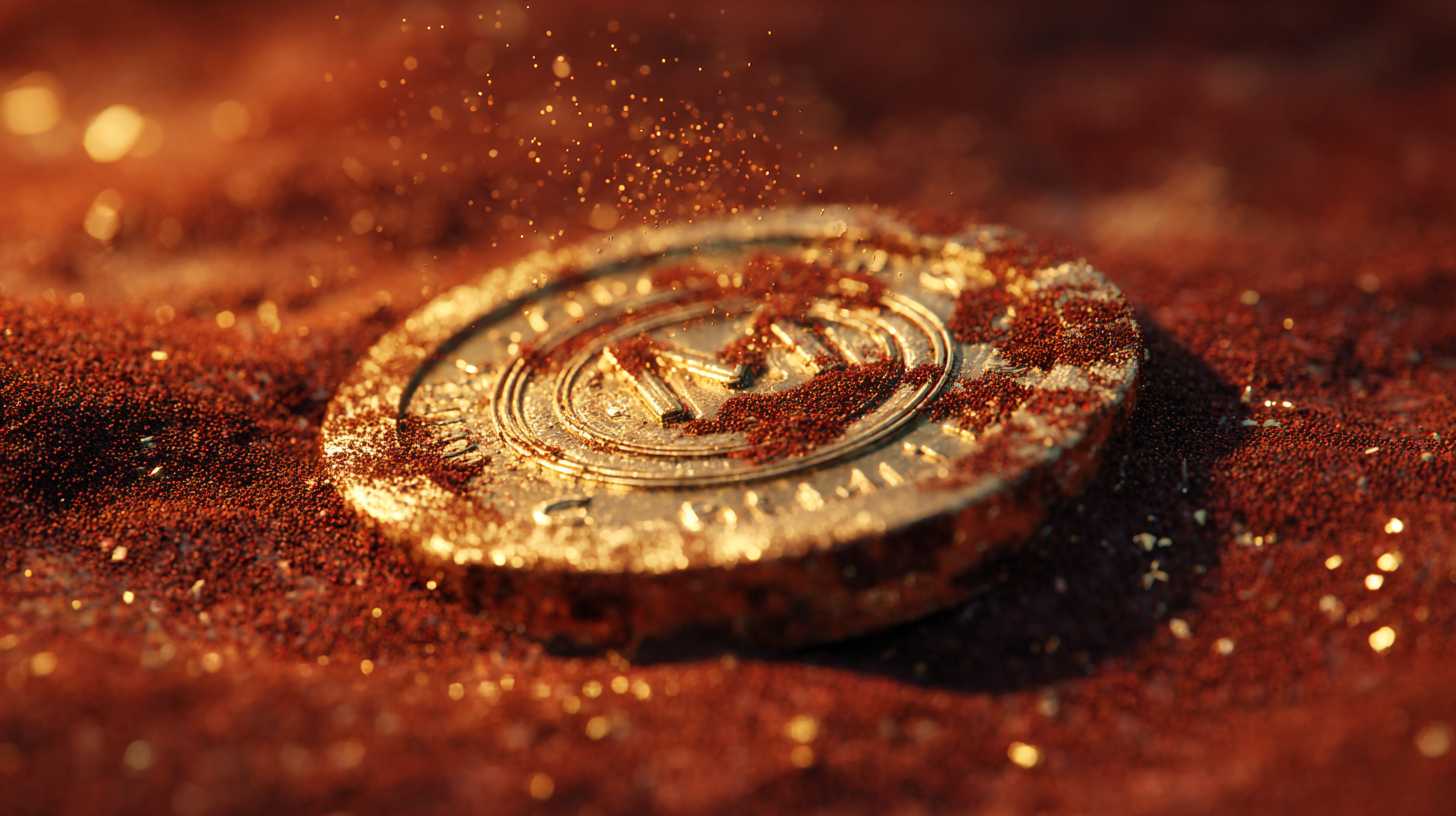
On January 1, 2014, while most of the cryptocurrency world was chasing Bitcoin's first sustained bull run past $1,000, a developer named Lennart Lopin launched a blockchain with a premise that sounded insane: a currency for Mars.
Not a Mars-themed meme coin. Not a speculative token riding the space hype cycle. An actual, technically considered cryptocurrency designed to function as the monetary system of a human settlement on another planet. The idea was grounded not in fantasy but in a specific observation about physics that most people in the crypto space had never considered.
Twelve years later, Marscoin is still running. That fact alone puts it in extraordinary company. The vast majority of the 500+ cryptocurrencies that launched in 2014 are dead — abandoned codebases, empty networks, forgotten wallets. Marscoin has survived exchange collapses, network attacks, DDoS campaigns, viral fame, copycat scams, and the entire crypto winter. It has been upgraded to a modern Bitcoin Core 28.x codebase, adopted merged mining with two of the largest Scrypt networks, and become the foundation of the Martian Republic's governance system.
This is the story of how that happened.
The Founding Insight
The core insight behind Marscoin is not financial. It is physical.
Bitcoin cannot work on Mars. This is not a matter of opinion, network configuration, or software patches. It is a consequence of the speed of light.
The distance between Earth and Mars varies from approximately 55 million kilometers at closest approach to 401 million kilometers at opposition. Radio signals, traveling at the speed of light, take between 3 minutes and 22 minutes to cross this gap one way. A round trip — the minimum for any confirmation — takes between 6 and 44 minutes.
Bitcoin's blockchain synchronizes in near-real-time. When a miner on Earth finds a block, it propagates across the network in seconds. Every node validates it and begins working on the next block immediately. The entire system assumes low-latency communication between participants.
A Bitcoin node on Mars would receive blocks 3 to 22 minutes late. By the time a Mars-based miner received a new block from Earth, the Earth network would already be one to two blocks ahead. Any block the Mars miner produced would be instantly orphaned. Any transaction a Mars user submitted would sit in mempool limbo for minutes before even reaching Earth's miners. The longest-chain rule — Bitcoin's consensus mechanism — would ensure that Earth's chain always won.
This is not a software problem. It is a physics problem. No protocol optimization, no relay network, no clever caching can change the speed of light. Mars will always have multi-minute communication delays with Earth. The only solution is a separate blockchain with its own consensus, its own miners, and its own network. That blockchain is Marscoin.
Lopin grasped this in 2013, years before SpaceX's Mars ambitions became mainstream news. The question was not if Mars would need its own currency, but what that currency should look like — and whether it should be ready before the first colonists arrived.
2014: Year Zero
Marscoin launched on January 1, 2014, with a genesis block mined into the new year. The initial parameters were carefully chosen: the Scrypt proof-of-work algorithm (memory-hard, resistant to ASIC domination), 123-second target block times, and a total supply of approximately 48 million MARS.
The early months moved fast.
The Mars Society donation was a defining moment. Dr. Robert Zubrin — aerospace engineer, author of The Case for Mars, and arguably the most influential advocate for Mars colonization since Wernher von Braun — accepted the donation in person. A physical Marscoin token wallet containing 500,000 MARS was placed directly in his hands. This was not a press release or a virtual gesture. It was a real-world handshake between the cryptocurrency community and the oldest, most credible Mars advocacy organization on Earth.
The total donation to the Mars Society would eventually reach 1,000,000 MARS — a million coins backing the mission to put humans on another planet.
The Early Exchange Era (2014–2019)
For a cryptocurrency in 2014, exchange listings were existential. Without exchanges, there was no price discovery, no liquidity, no way for new participants to acquire the coin. Marscoin secured listings on several platforms: Coins-e, Poloniex, Cryptopia, and Novaexchange.
Then, one by one, every exchange died.
| Exchange | Listed | Ceased/Delisted | Cause |
|---|---|---|---|
| Coins-e | 2014 | 2016 | Exchange ceased operations entirely. |
| Poloniex | 2014 | July 2016 | Mass delisting during Circle's acquisition. Dozens of smaller coins removed. |
| Cryptopia | ~2015 | November 2018 | Delisting of low-volume assets. Exchange later hacked (Jan 2019) and shut down permanently. |
| Novaexchange | ~2016 | 2019 | Exchange ceased operations. |
Most cryptocurrency projects do not survive the loss of a single exchange listing. Marscoin lost all four. The liquidity evaporated. The price discovery mechanism vanished. For many observers, this was the end of the story — another altcoin from 2014, dead and forgotten like hundreds of others.
But the blockchain kept running. The nodes kept syncing. The miners kept mining. A project built for a multi-decade timeline does not measure its health by this quarter's exchange listings.
The Crisis of 2020
If losing every exchange was a slow siege, 2020 was a direct assault.
The Marscoin network came under attack. The specific nature of the attack targeted the chain's consensus — exploiting the relatively low hashrate of a standalone Scrypt chain to produce conflicting blocks and stall the network. For months, the blockchain was effectively frozen. New blocks were not being reliably produced. Transactions could not confirm.
For any cryptocurrency, a stalled blockchain is a death sentence. The ledger is supposed to be alive — processing transactions, recording state, ticking forward block by block. When it stops, the entire value proposition collapses. Coins that cannot be transferred have no utility. A governance system that cannot record votes has no legitimacy.
Most projects in this situation never recover. The developers walk away, the community scatters, the chain becomes a digital tombstone.
Marscoin's core team did not walk away.
In October 2020, the blockchain resumed operation. The network attack was mitigated, the chain restarted, and blocks began flowing again. The specifics of the recovery involved coordinated action by the remaining node operators and miners, a testament to the committed community that had survived the exchange collapses and stayed through the silence.
Resilience is not a feature you add. It is a quality that emerges from surviving what should have killed you. The 2020 crisis was Marscoin's existential test. The blockchain had been declared dead by casual observers multiple times before. After October 2020, the declarations stopped carrying weight. A network that survives a months-long stall and resumes operation has demonstrated something that whitepapers cannot promise: actual durability.
The Musk Moment (2021)
What happened next was stranger than any network attack.
In April 2020, the Marscoin Foundation made a private offer: 100,000 MARS donated to SpaceX, the company that was (and is) building the actual hardware to transport humans to Mars. The offer went unanswered. SpaceX, understandably, had other priorities.
Then in December 2020, Elon Musk — founder of SpaceX, the world's richest person, and a man whose tweets could move markets by billions of dollars — expressed public support for the concept of a Mars-based cryptocurrency.
And on February 14, 2021, he tweeted it directly:
"There will definitely be a Marscoin!"
The effect was instantaneous and chaotic. Marscoin's value surged. Trading volume spiked. The project that had spent six years in quiet development was suddenly in the global spotlight, trending on social media, discussed on every crypto forum.
But the attention brought predators.
Within days, fake Marscoin tokens appeared on Ethereum and Binance Smart Chain — scam contracts deployed by opportunists to capitalize on the name recognition. They had no connection to the real Marscoin blockchain, no team, no technology. Just a name and a hype cycle.
On February 17, 2021, Binance CEO Changpeng Zhao (CZ) publicly suggested that Binance had something to do with "Marscoin" — a claim that was, at best, misleading. The real Marscoin, the one that had been running since January 1, 2014, was not listed on Binance. The copycat tokens were.
Meanwhile, Marscoin's mining pools were hit with DDoS attacks. The infrastructure that kept the real network running was under assault precisely when the world was paying attention. It was a textbook demonstration of the dark side of viral attention: real projects get attacked while fakes get promoted.
The lesson of 2021: Fame is not validation. A tweet from the world's richest person generated more chaos than value. The copycat coins stole attention and money from unsuspecting buyers. The DDoS attacks threatened the real network. Marscoin survived the Musk moment the same way it survived everything else: by continuing to operate. The blockchain does not care about tweets. It cares about valid blocks.
The Mars Society Partnership Deepens
While the crypto world chased hype cycles, Marscoin's relationship with the Mars Society — the world's preeminent Mars advocacy organization, founded in 1998 — continued to develop through substance rather than spectacle.
On August 5, 2019, the Mars Society officially began accepting Marscoin donations, integrating cryptocurrency into their fundraising infrastructure. This was not a casual endorsement. The Mars Society is a serious scientific and engineering advocacy organization. Its annual conventions feature presentations by NASA engineers, planetary scientists, and aerospace executives. Accepting Marscoin donations was a signal that the project had earned credibility within the space community.
The presentations at Mars Society conventions tell the story of deepening engagement:
- 2014 — First presentation. The concept introduced. The 500,000 MARS donation.
- 2017 — Progress update. The technical evolution of the chain.
- 2022 — The Marscoin whitepaper presented at the 25th International Mars Society Convention. The paper was stored on IPFS — the InterPlanetary File System, a protocol whose name is not coincidental — creating a permanent, decentralized record of the project's technical vision.
- 2023 — Continued presentation. The roadmap toward the Martian Republic governance layer.
The total cumulative donation to the Mars Society reached 1,000,000 MARS. But the donations were always secondary to the partnership's real value: legitimacy. The Mars Society's engagement signaled that Marscoin was not a joke or a meme. It was a serious technical project, evaluated by serious people, and found worthy of continued association.
Technical Evolution
A blockchain that does not evolve dies. The cryptocurrency landscape of 2014 bears almost no resemblance to 2026. Protocols that seemed adequate at launch require fundamental upgrades to remain competitive, secure, and functional. Marscoin's technical evolution has been steady and deliberate, each upgrade addressing a specific operational need.
ASERT Difficulty Adjustment (July 2024)
The original difficulty adjustment algorithm was adequate for a network with stable hashrate. But Marscoin's hashrate fluctuated significantly, especially after merged mining was introduced. Miners would join and leave, causing block times to swing wildly — sometimes blocks every 30 seconds, sometimes gaps of 10 minutes or more.
The ASERT (Absolutely Scheduled Exponentially Rising Targets) algorithm, adopted in July 2024, adjusts difficulty on every block using an exponential moving average. The result: a 47% reduction in block time variance. Blocks now arrive at close to the target 123-second interval regardless of hashrate fluctuations. For users, this means predictable confirmation times. For the governance system, it means votes and proposals are processed on a reliable schedule.
Mobile Wallets (2024–2025)
A currency that only works on desktop computers is not a currency — it is a hobby. The Marscoin team released native mobile wallets for iOS in November 2024 and Android in January 2025. These are full SPV (Simplified Payment Verification) wallets that connect directly to the Marscoin network, not custodial wrappers around a centralized service. Users hold their own keys, verify their own transactions, and interact with the blockchain directly from their phones.
Bitcoin Core 28.x Upgrade (February 2025)
In February 2025, Marscoin completed a major upgrade to the Bitcoin Core 28.x codebase. This was not a trivial update. It involved rebasing the entire Marscoin client onto a modern Bitcoin Core foundation, inheriting years of performance improvements, security patches, peer-to-peer protocol enhancements, and wallet functionality improvements.
The upgrade brought Marscoin's networking stack, transaction validation engine, and RPC interface to parity with the most battle-tested blockchain codebase in existence. Every security fix that the Bitcoin Core team had shipped since Marscoin's last major rebase was integrated. The result is a node that is faster, more secure, and more compatible with the broader cryptocurrency infrastructure.
This was followed by Core v28.1.0 in January 2026, incorporating additional stability improvements and preparing the groundwork for future protocol enhancements.
Merged Mining and the 2-Terahash Network
At block 3,145,555, Marscoin activated Auxiliary Proof of Work (AuxPoW), enabling merged mining with the Litecoin and Dogecoin networks. This was a transformative security upgrade.
Merged mining allows a miner securing one Scrypt blockchain to simultaneously secure another, with zero additional computational cost. Litecoin and Dogecoin miners — who collectively operate some of the most powerful Scrypt mining infrastructure in the world — can include Marscoin block headers in their work. If their Litecoin block also satisfies Marscoin's difficulty, they produce a valid Marscoin block as a byproduct.
The effect on network security was dramatic. By March 2025, the Marscoin network reached 2 terahashes per second — a hashrate that would be effectively impossible for any single attacker to overcome. The days of the 2020 network stall were consigned to history. The chain was now protected by the combined mining power of three established Scrypt networks.
The full technical timeline:
Jul 2024 — ASERT difficulty adjustment: 47% less block time variance
Nov 2024 — iOS mobile wallet released
Jan 2025 — Android mobile wallet released
Feb 2025 — Major upgrade to Bitcoin Core 28.x codebase
Mar 2025 — Network reaches 2 terahashes via merged mining (AuxPoW at block 3,145,555)
Jan 2026 — Core v28.1.0 released
The Deliberate Technical Choices
Marscoin's technical decisions are often contrarian by the standards of the broader cryptocurrency industry. Where other chains chased features, Marscoin chose simplicity. Where others prioritized flexibility, Marscoin prioritized finality. Every decision was made through the lens of a single question: what does a Mars colony actually need?
Anti-ASIC: General-Purpose Mining
Bitcoin mining is dominated by ASICs — Application-Specific Integrated Circuits that cost thousands of dollars and do nothing except compute SHA-256 hashes. This creates an industrial mining class: only entities with access to cheap power, specialized hardware, and large-scale facilities can participate in consensus.
On Mars, you cannot ship ASICs. Every gram of payload costs a fortune and takes months in transit. The colony will have general-purpose computers — the same machines that run life support, science instruments, communications, and habitat management. Marscoin's Scrypt algorithm is memory-hard, meaning it requires significant RAM access during computation. General-purpose computers with standard RAM can mine competitively. The colony's existing hardware IS the mining infrastructure.
Rejecting SegWit and RBF: Transaction Finality
Marscoin deliberately rejected two features that Bitcoin adopted: Segregated Witness (SegWit) and Replace-by-Fee (RBF).
SegWit restructures how transaction data is stored, separating signature data from transaction data. While it provides benefits (malleability fix, increased effective block size), it also adds protocol complexity and introduces edge cases. For a chain that prioritizes simplicity and robustness over throughput, the trade-off was not justified.
RBF allows an unconfirmed transaction to be replaced by a new version with a higher fee. On Bitcoin, this is useful for fee-bumping stuck transactions. But it fundamentally undermines zero-confirmation transaction acceptance — a merchant cannot trust an unconfirmed transaction because the sender might replace it. Marscoin rejected RBF to preserve transaction finality: when you send a transaction, it is sent. There is no undo, no replacement, no take-backs. For a colony where commerce depends on clear, immediate settlement, this simplicity is a feature.
123-Second Blocks
Bitcoin targets 10-minute blocks. Litecoin targets 2.5 minutes. Marscoin targets 123 seconds — just over two minutes.
The practical benefit is faster confirmations. A merchant can accept a 1-confirmation payment in roughly two minutes. For small daily transactions — buying supplies, paying for services, settling accounts — this is close to the threshold of usability.
But the number 123 carries a symbolic dimension. A Martian solar day (sol) is 24 hours, 37 minutes, and 22 seconds — approximately 2.7% longer than an Earth day. The 123-second block time sits 2.5% above the round 120-second mark. It is a small, deliberate asymmetry — a reminder, embedded in the protocol itself, that this chain belongs to a different world.
IPFS Integration
The InterPlanetary File System is a peer-to-peer protocol for storing and sharing data in a distributed file system. Its name is not a marketing gimmick — IPFS was designed with the explicit consideration that file systems need to work across interplanetary distances, where centralized servers and fixed IP addresses break down.
Marscoin uses IPFS for storing data that is too large for on-chain OP_RETURN fields: proposal texts, whitepaper documents, governance records, citizen data. The blockchain stores the IPFS hash (a content-addressed identifier), anchoring the off-chain data to a specific point in time. The data itself is distributed across IPFS nodes, redundant and persistent.
On Mars, IPFS nodes running locally would cache frequently accessed data, while new content from Earth would propagate during communication windows. The combination of Marscoin's blockchain for immutable reference pointers and IPFS for bulk data storage creates a complete information infrastructure that degrades gracefully under interplanetary latency.
The Interplanetary Transfer Plan
There is a plan for what happens when humans actually go to Mars. It is specific, considered, and documented.
Once the first crewed SpaceX Starship heads toward Mars, a complete copy of the Marscoin blockchain will be transferred with it. This is not metaphorical. The crew will carry the full chain data — every block, every transaction, every OP_RETURN from the genesis block forward. All existing addresses and their balances will be preserved. Every citizen registered on the blockchain, every vote recorded, every proposal notarized — all of it arrives on Mars intact.
From that point, the Mars-side chain begins producing blocks independently. New transactions on Mars are confirmed by Mars-based miners. The Earth chain and Mars chain continue in parallel, each serving their respective planet's economy and governance.
The security question: What prevents Earth-side interference with the Mars chain? Several proposals exist. One approach uses the communication delay itself as a security feature: any attempt to broadcast conflicting blocks from Earth would arrive minutes late, easily identified and rejected by Mars nodes. Another proposes checkpoint transactions during communication windows, allowing both chains to acknowledge each other's state without requiring real-time synchronization. These are active areas of development, and the specific mechanism will be finalized before the first transfer.
The key insight is that Marscoin was designed for this moment from the beginning. It is not a currency that will need to be adapted for Mars. It is a currency that was built for Mars and has been running on Earth as a dress rehearsal.
Twelve Years of Uninterrupted Operation
Let us put this in perspective.
In January 2014, when Marscoin launched, there were roughly 500 cryptocurrencies in existence. Today, of those original 500, the vast majority are dead. Not "declining" or "struggling" — dead. Abandoned codebases on GitHub. Empty networks with zero nodes. Websites that resolve to parking pages or nothing at all.
The attrition rate for 2014-era altcoins exceeds 90%. The survivors are almost exclusively coins that had either massive communities (Litecoin, Dogecoin), major corporate backing, or unique technical propositions that attracted sustained development interest.
Marscoin had none of those advantages in the conventional sense. It had a small community, no corporate backing, and a premise — currency for Mars — that most people dismissed as science fiction. What it had was a founder who understood that the project's timeline was measured in decades, not quarters, and a core community that shared that understanding.
Consider what Marscoin has survived:
- Every exchange it was listed on collapsed or delisted it. The project continued.
- The network was attacked and stalled for months in 2020. The network resumed.
- DDoS attacks targeted its mining pools during peak attention. The pools recovered.
- Copycat scam tokens stole its name and brand. The real chain kept producing blocks.
- The entire crypto market crashed 70%+ in 2022. Development continued.
- Major exchanges refused to list it. The community built its own infrastructure.
Each of these events has killed other projects. Marscoin survived all of them. Not through luck, not through deep pockets, but through the simple, stubborn act of continuing to operate. A block every 123 seconds, day after day, year after year, through every crisis and every silence.
The most powerful thing a blockchain can do is refuse to stop.
What Comes Next
Marscoin was always intended to be more than a currency. Currency is the foundation, not the destination. The destination is a complete infrastructure for self-governance — and that infrastructure is now being built.
The Martian Republic is the governance layer built on top of Marscoin's blockchain. It implements a four-tier direct democracy where every citizen gets one vote, every ballot is cryptographically secret (using a CoinShuffle-based protocol), and every result is publicly auditable on-chain. Citizens register their civic identity on the blockchain. Proposals are notarized on-chain. Votes are recorded as transactions. The treasury is managed through multi-signature wallets with on-chain authorization.
This is not a theoretical governance model published in an academic paper. It is running software that real people use to make real decisions.
The roadmap ahead includes:
- Dynamic block sizes — allowing the chain to scale throughput with demand without hard-forking to arbitrary limits.
- Enhanced IPFS integration — deeper coupling between on-chain governance and off-chain document storage.
- The Academy — an educational platform (you are reading it now) preparing citizens for informed participation in governance.
- Inventory and resource management APIs — extending the blockchain's role from financial ledger to colony resource tracker.
- The Interplanetary Transfer Protocol — finalizing the mechanisms for maintaining dual Earth-Mars chains.
Twelve years ago, a developer launched a blockchain on the premise that Mars would need its own currency. The crypto world laughed, or more accurately, did not notice. The exchanges died. The network was attacked. The copycats appeared. The attention came and went.
Through all of it, the chain kept running. Block after block. 123 seconds at a time.
The first Starship has not landed on Mars yet. But when it does, the currency will be ready. It has been ready since January 1, 2014. It has been practicing for twelve years.
The deepest truth about Marscoin is this: It was never really about cryptocurrency. It was about building an institution that does not require trust, does not require proximity, and does not require permission. An institution that can survive the death of every exchange, the collapse of every server, the hostility of every attacker — and still produce a valid block every 123 seconds. That is the kind of institution you can build a civilization on. That is the kind of institution Mars requires.